What AV Equipment Do You Actually Need for a Wedding?
When planning a wedding, AV equipment probably isn't the first thing you're excited to think about. But it plays a major role in some of the moments you'll remember most.
Your guests need to hear your vows. Your entrance song needs to hit at exactly the right moment. Toasts need to sound clear. And when it's finally time to dance, the music needs to fill the room without sounding like it's coming from a Bluetooth speaker in the corner.
The right wedding AV equipment makes all of that happen seamlessly. So what equipment do you actually need? Here's what to consider when building the audio, visual, and entertainment setup for your wedding.
Your Wedding Should Sound as Good as It Looks
From crystal-clear ceremony audio to a reception built for the dance floor, we'll help you create the right AV and production setup for your wedding.
1. A Professional Sound System
Let's start with the obvious: speakers. But choosing a wedding sound system isn't simply a matter of finding speakers that are loud enough. Your sound system should be designed around the size, layout, acoustics, and guest count of your venue.
A typical wedding may require:
- Professional speakers
- Subwoofers for the reception and dance floor
- Audio mixer
- Speaker stands or rigging
- Proper cabling and power distribution
For larger weddings, multiple speakers may be strategically placed throughout the venue to create even coverage without making one area uncomfortably loud.
2. Wireless Microphones
Some of the most important moments of your wedding depend on microphones. Think:
- Ceremony vows
- Officiant
- Wedding speeches
- Toasts
- Announcements
Wireless microphones allow people to speak naturally without being tied to one location. Depending on the wedding, you may need handheld wireless microphones, lavalier microphones, or both.
And don't forget the less glamorous—but very important—part: backup equipment. A professional AV team should have a plan if a microphone or wireless frequency encounters an issue.
3. Ceremony Audio
One of the most commonly overlooked parts of wedding AV equipment is ceremony sound. Your ceremony may take place in an entirely different area from your reception, which means it may need its own audio setup. That could include:
- Speakers
- Wireless microphones
- Music playback
- Audio mixer
- Power
Outdoor ceremonies require even more consideration because you're working without the natural acoustics of an indoor space. The goal is simple: everyone should hear the ceremony clearly, including the guests sitting in the last row.
4. DJ Equipment
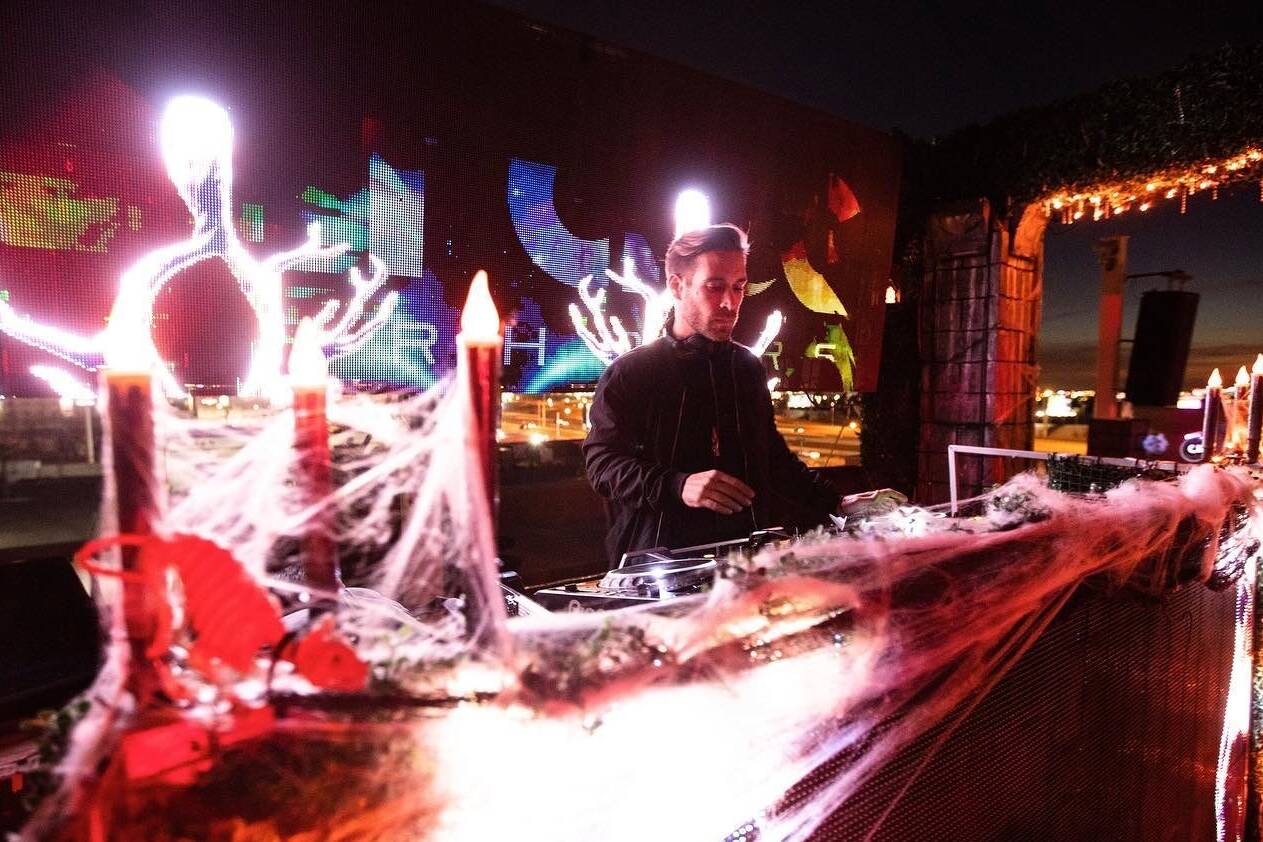
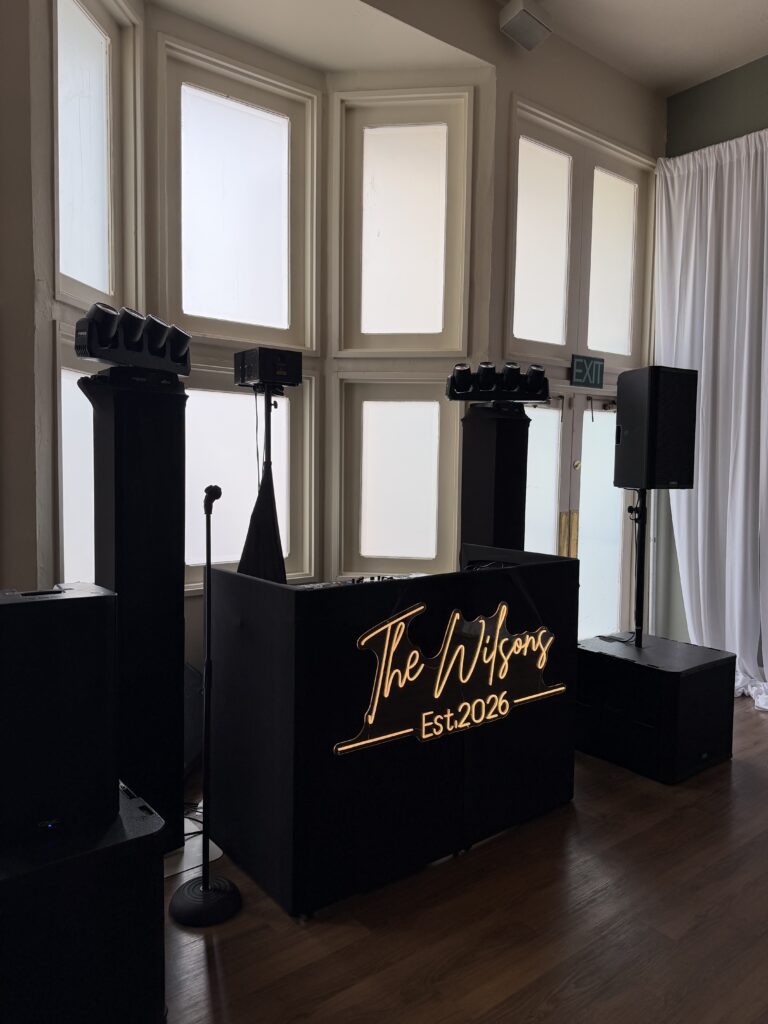
If you're hiring a DJ, you'll need more than speakers. A professional DJ setup may include:
- DJ media players or controllers
- Professional mixer
- DJ booth
- Booth monitors
- Headphones
- Audio connections
- Backup playback options
Some DJs bring their own equipment. Others may have specific equipment requirements.
If you're booking a professional or touring DJ for your wedding, technical riders can become even more important. Dusk Till Dawn provides professional DJ equipment rentals and can help build the right setup around your entertainment.
5. Dance Floor Sound
Dinner music and dance floor music have very different requirements.
When the reception transitions into dancing, your sound system needs enough impact to completely change the energy of the room. That's where subwoofers and properly designed speaker placement become especially important. You want guests to feel the music on the dance floor without making conversation impossible everywhere else.
Great audio design creates both.
6. Wedding Lighting
Technically, lighting may extend beyond traditional AV—but if you're thinking about production, it deserves a place on the list. Lighting can completely change how your wedding venue looks and feels. Depending on your vision, wedding lighting might include:
- Uplighting
- Dance floor lighting
- Moving lights
- Pin spotting
- Stage lighting
- Architectural lighting
- Custom lighting effects
Lighting can also evolve throughout the wedding. Dinner might feel warm and intimate. Then, when it's time to dance, the same room can transform into an entirely different environment. That's where lighting becomes more than decoration—it becomes part of the experience.
7. Screens, Projectors & LED Displays
Not every wedding needs video, but visual displays can be useful for larger or more elaborate receptions. They can be used for:
- Photo and video montages
- Live camera feeds
- Custom visuals
- Names or monograms
- Creative visual content
For larger venues, screens can also help guests see important moments happening across the room.
8. Power & Cabling
This isn't the glamorous part of wedding production, but it's one of the most important.
Speakers, lighting, DJ equipment, displays, and other production elements all require reliable power. An experienced production team considers electrical requirements before equipment ever arrives at the venue. They'll also plan cable paths so equipment can operate safely without creating unnecessary hazards or disrupting the look of the space.
Do You Need Separate AV for the Ceremony, Cocktail Hour & Reception?
Sometimes, yes. If your wedding moves through several spaces, each area may have different technical requirements. For example:
- Ceremony: microphones, speakers, and music playback
- Cocktail hour: background music or live musician amplification
- Reception: microphones, DJ equipment, lighting, and full sound
- Afterparty: higher-energy sound, lighting, and entertainment
Thinking about these transitions ahead of time helps the wedding feel like one continuous experience rather than several disconnected events.
Does Your Wedding Venue Provide AV Equipment?
Some venues provide basic AV equipment or have an in-house production partner. Others allow you to bring in an outside production company. Before signing contracts, ask exactly what's included. You should also find out:
- Whether outside AV vendors are permitted
- Whether there are exclusive in-house services
- What power is available
- Whether there are sound restrictions
- What load-in and load-out rules apply
- Whether rigging or special effects require approval
Knowing the venue's technical limitations early can prevent expensive surprises later.
AV Rentals vs Full Wedding Production
Not every wedding needs a full production company. If you're planning something intimate and already know exactly what equipment you need, individual AV rentals may be enough.
But if you're trying to create a more immersive reception, working with a production team gives you something equipment alone can't provide: a cohesive plan. Instead of treating sound, lighting, entertainment, staging, and visuals as separate decisions, production brings them together around one creative vision.
That's especially valuable for weddings with multiple entertainment elements, custom designs, large guest counts, unusual venues, or an afterparty component.
What AV Equipment Does Your Wedding Actually Need?
There's no universal wedding AV package. A 75-person ceremony at a private estate has very different requirements from a 400-person ballroom reception. The right setup depends on:
- Your venue
- Guest count
- Indoor or outdoor spaces
- Entertainment
- Wedding timeline
- Creative vision
The goal shouldn't be to rent as much equipment as possible. It should be to choose the right equipment to make every important moment look, sound, and feel the way you imagined it.
Planning a Wedding in Las Vegas?
At Dusk Till Dawn, we approach weddings the same way we approach every great event: start with the experience and build the production around it.
From professional audio and DJ equipment to lighting, entertainment, stage design, and full event production, our team can help bring your wedding vision to life.
Explore our equipment rentals, live entertainment, and event production services, or contact Dusk Till Dawn to start planning.